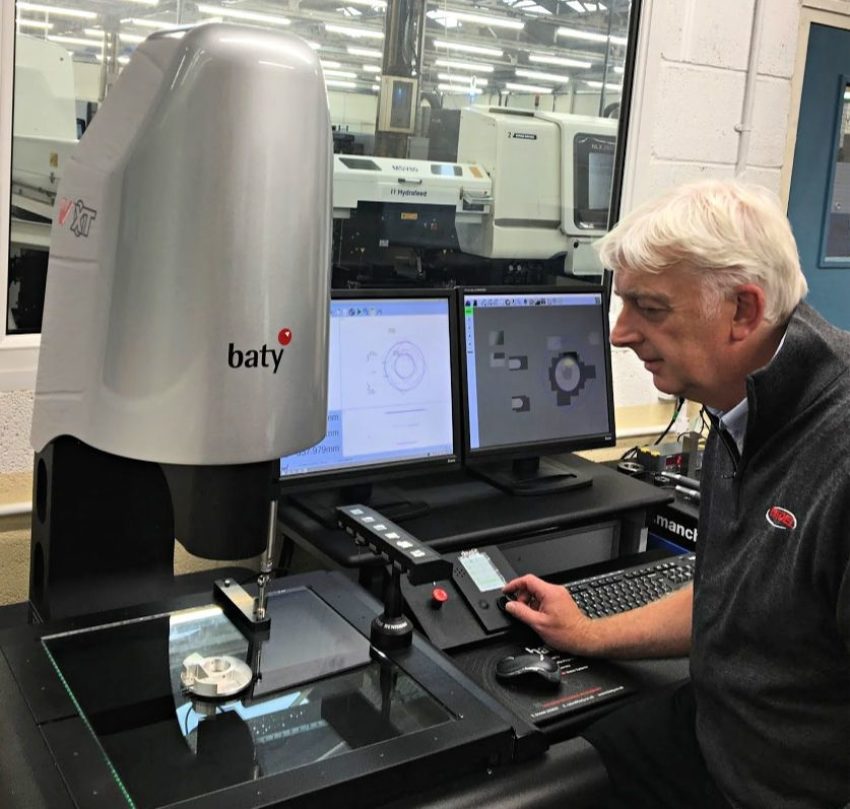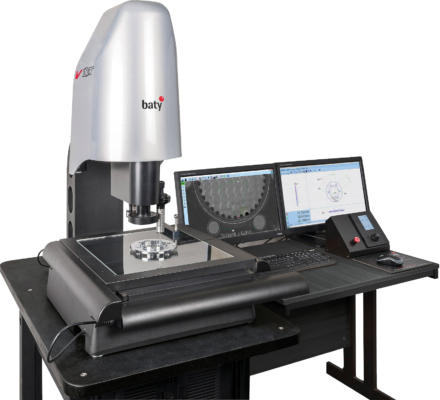

Guaranteeing the reliability of components is of the utmost importance, and automotive component producers must meet the highest levels of quality, whist maximising productivity and avoiding delays in production. As the precision and complexity of automotive parts become more demanding, particularly in the production of electric cars, so does the need for highly accurate metrology products.
Bowers Group fully understands the need for the most accurate measurement data possible, ensuring that the automotive supply chain can produce the highest quality parts and vehicles. From initial checks to final inspection, our advanced metrology equipment is engineered to deliver reliable, repeatable measurement accuracy. In recent years, the demand for in-line measurement inspection equipment has increased, resulting in faster inspection times and significantly higher sampling rates. Many of our products such as the Bowers’ DigiMic digital external micrometer can be made to UKAS BS 870 certification.
The automotive industry is one of the key markets for Bowers Group, with measurement solutions being supplied to the industry for more than 40 years. Bowers Group’s 3 point XT bore gauges are used within virtually all automotive plants worldwide, and are a tried and trusted method of measurement in this competitive industry.
In addition, Bowers Group has supplied automotive manufactures with many unique variants of 3 point XT bore gauges, which have often been specially produced for specific applications. Leading special products from Bowers Group include gauges for measuring components such as piston rings, brake calipers, crankshafts and bearings. Our special applications team has also developed solutions for the automatic measurement of gears and car body panel measurement.
By utilising the best metrology tools for each component, automotive manufacturers are able to meet strict tolerances, provide smooth working parts and ensure they meet safety requirements.
By enabling precise, reliable measurements, metrology tools help reduce waste, optimise material use, and improve resource efficiency. Technologies like optical and 3D metrology allow manufacturers to cut material consumption without sacrificing quality. Advanced measurement also supports lightweight component design, which improves fuel efficiency and lowers emissions. Additionally, metrology strengthens quality control, reducing rework and scrap. As the industry pushes for greener production, metrology remains a key driver of efficiency, innovation, and sustainability.